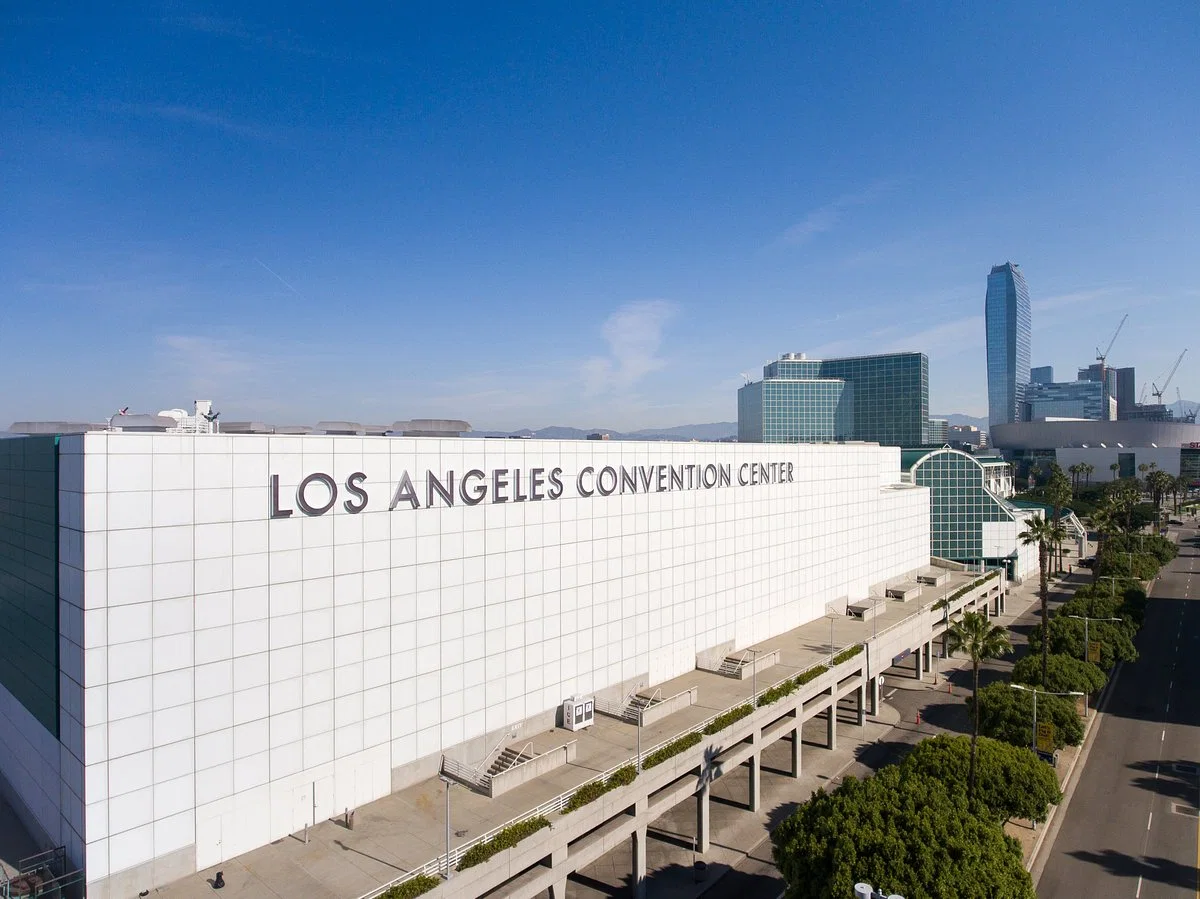
LACC is split across South Hall, West Hall, and the older North Hall, with West Hall having gone through a major rebuild that brought newer exhibit space online in recent years.
The center sits inside the LA Live district next to Crypto.com Arena, the Peacock Theater, and a cluster of downtown convention hotels.
Programs booked here are typically full trade shows or large conferences with general service contractors managing much of the floor, a different model than the hotel-run events on the Westside.
Show organizers publish their own exhibitor manuals on top of the venue's rules, and those manuals typically take precedence for booth-specific questions.
Execution priorities
- Three exhibit halls of genuinely large scale, unlike the meeting-room footprints of the Santa Monica hotel properties.
- A general service contractor typically manages exhibit-floor labor, drayage, and material handling rather than in-house hotel staff.
- Marshalling yards and scheduled dock access built for freight trucks, not the valet-adjacent service entrances at the beach hotels.
- A downtown location inside the LA Live complex, roughly 16 to 20 miles from Santa Monica depending on the route.
- Multiple simultaneous shows running across different halls at once, which means signage and wayfinding matter more here than at a single-event venue.
The region's exhibit-hall-scale venue
Everything on this list outside downtown LA is a hotel, a theater, or a stadium. LACC is the one purpose-built exhibit facility, with hall space designed for booth rows, forklifts, and multi-day move-in schedules rather than banquet sets.
That scale changes the planning conversation entirely. A program moving from a Santa Monica hotel ballroom to an LACC hall needs to think in terms of drayage, freight elevators for material handling, and a general service contractor rather than a hotel banquet team.
South Hall, West Hall, and the older North Hall
West Hall was rebuilt as part of a major expansion, bringing newer, larger exhibit space online alongside the existing South Hall. North Hall is the oldest of the three and is typically used for smaller shows or overflow.
Which hall a show lands in affects everything from ceiling height for rigging to proximity to loading docks, so confirming the specific hall assignment early is worth more than general venue research.
Union jurisdiction and general service contractors
Unlike the Santa Monica hotel properties, where in-house staff run the floor, exhibit-hall work at LACC typically runs through a general service contractor and organized labor for material handling, electrical, and rigging.
Exhibitors and their outside vendors need to understand which tasks they can perform themselves versus which fall under contracted labor, and that line is set by the show's general service contractor, not by a single fixed rule across every show.
Drayage, marshalling yards, and dock scheduling
Freight destined for LACC typically routes through a marshalling yard before it reaches the hall, with drayage crews moving it from truck to booth on a scheduled timeline rather than a direct curb drop.
Because the venue runs multiple shows back to back, dock time is scheduled tightly. Crews coming from the Westside should build in extra drive time on the I-10 for morning move-in, when traffic into downtown is heaviest.
Reading the exhibitor manual before the venue's own rules
Every show at LACC publishes its own exhibitor manual through its general service contractor, covering booth specifications, drayage rates, and labor order forms specific to that event. That document usually governs day-to-day questions more directly than the venue's general policies.
Exhibitors who skip the manual and rely only on general knowledge of the venue tend to run into avoidable costs, particularly around material handling and labor minimums that vary show to show.
Frequently asked questions
How far is the Los Angeles Convention Center from Santa Monica?
Roughly 16 to 20 miles east via the I-10, typically 30 to 45 minutes depending on traffic.
Does LACC use union labor for exhibit-floor work?
Material handling, electrical, and rigging typically run through a general service contractor and organized labor, unlike the in-house staffing at the Santa Monica hotels.
What is the difference between South Hall, West Hall, and North Hall?
West Hall was rebuilt as part of a recent expansion; South Hall is the other large modern hall; North Hall is the oldest and often used for smaller shows.
How does freight get from a truck to a booth?
Through a marshalling yard and scheduled drayage, not a direct curb drop, so dock timing should be confirmed with the show's general service contractor.
Should exhibitors follow the venue's rules or the show's exhibitor manual?
The show's own exhibitor manual, published by its general service contractor, typically governs booth-level questions like drayage and labor, on top of the venue's general policies.
Can exhibitors bring their own labor into an LACC hall?
It depends on the task and the show's specific labor rules; some work can be self-performed by exhibitor personnel while other tasks require contracted labor under the show's general service contractor.