
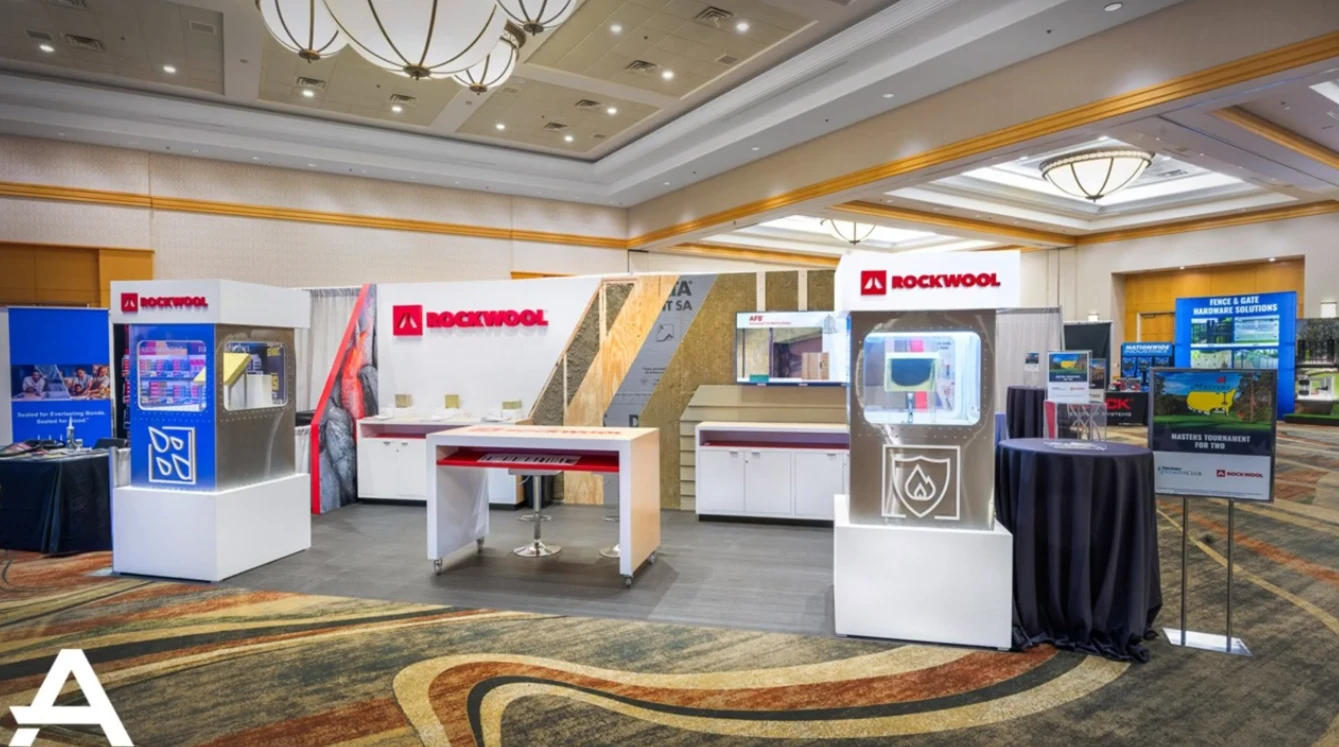
Inline booth displays are the 10-by-10 and 10-by-20 spaces that make up most of a trade show floor, arranged in back-to-back rows with pipe and drape or a shared back wall separating one exhibitor from the next.
Exhibitors who take an inline slot are usually working a regional show at Pasadena Convention Center or a Santa Monica hotel vendor fair rather than anchoring a flagship presence, and the display has to be built for that scale.
Execution priorities
- Sightlines only work from the open aisle, not from three sides.
- Back wall height is capped so it does not shadow the neighbor behind it.
- Case storage has to fit under the table or behind the back wall, not in the aisle.
- Setup time is short because labor and floor access are shared with every other row.
Working inside a shared aisle
An inline booth only faces one direction, so every design decision runs through a single question: what does someone see from six feet away while walking past, not standing still.
Neighboring booths are close enough that a tall back wall or a loud lighting rig reads as an intrusion on the row rather than a strong presence, which is why most show service kits cap inline back walls well below what an island booth allows.
That single-direction constraint also decides staffing: with only one open side, one or two staff members can cover the whole booth, where a peninsula or island with multiple approach angles needs more bodies just to greet everyone walking by.
Graphics that read from six feet
Text-heavy graphics disappear at aisle speed; a single clear headline and a product image carry more weight than a paragraph of copy squeezed onto a back wall.
Lighting matters more in an inline row than exhibitors expect, because the ambient hall light is shared with two neighbors and a dim booth simply reads as empty even when staffed.
Storage and the case-to-carpet gap
Empty cases have to go somewhere during the show, and an inline footprint rarely has room to stash them on-site, so most exhibitors send cases to storage through the show's material handling desk rather than tucking them behind the counter.
That storage trip is a line item worth planning for before move-in, not something to discover when the aisle is already full of neighbors' freight.
A booth staffer who needs a spare case of literature mid-show also has to account for the round trip to offsite storage, which is longer at a large downtown hall than at a smaller regional center where the storage area sits closer to the floor.
Drayage on a 10-by footprint
Freight for an inline booth is usually light enough to hand-carry or cart in, which keeps drayage costs down compared to an island exhibit, but the show's material handling rules still apply to anything arriving on a pallet.
For shows routed through Los Angeles Convention Center or Long Beach, the drayage desk works on the general contractor's schedule, so an inline exhibitor's small freight can still get stuck behind a queue of larger shipments if it is not tagged and timed correctly.
Confirming the advance freight deadline and shipping a week or two ahead, rather than counting on show-site delivery, is usually the cheapest way to keep an inline booth's small shipment out of that queue altogether.
Frequently asked questions
How tall can an inline back wall be?
Most regional shows cap inline back walls at eight feet, tapering down toward the front of the booth, so the display does not shadow the exhibitor working the row behind it.
Do I need a full material handling account for an inline booth?
If freight is small enough to hand-carry, often not; but anything arriving on a pallet or by common carrier still goes through the show's drayage desk regardless of booth size.
Where do empty cases go during the show?
They are typically tagged and stored offsite by the show's material handling contractor and returned to the booth at teardown, since an inline footprint rarely has room to keep them on-site.
Is lighting worth the extra cost for a small inline booth?
Usually yes. A dimly lit inline booth reads as unstaffed from the aisle even when someone is standing in it, and the fix is inexpensive compared to what a taller back wall would cost.
When does it make sense to upgrade from inline to a bigger footprint?
Once traffic and demo needs outgrow what one open side can support, a peninsula or island space starts to pay for itself in sightlines and meeting room the inline row cannot offer.