
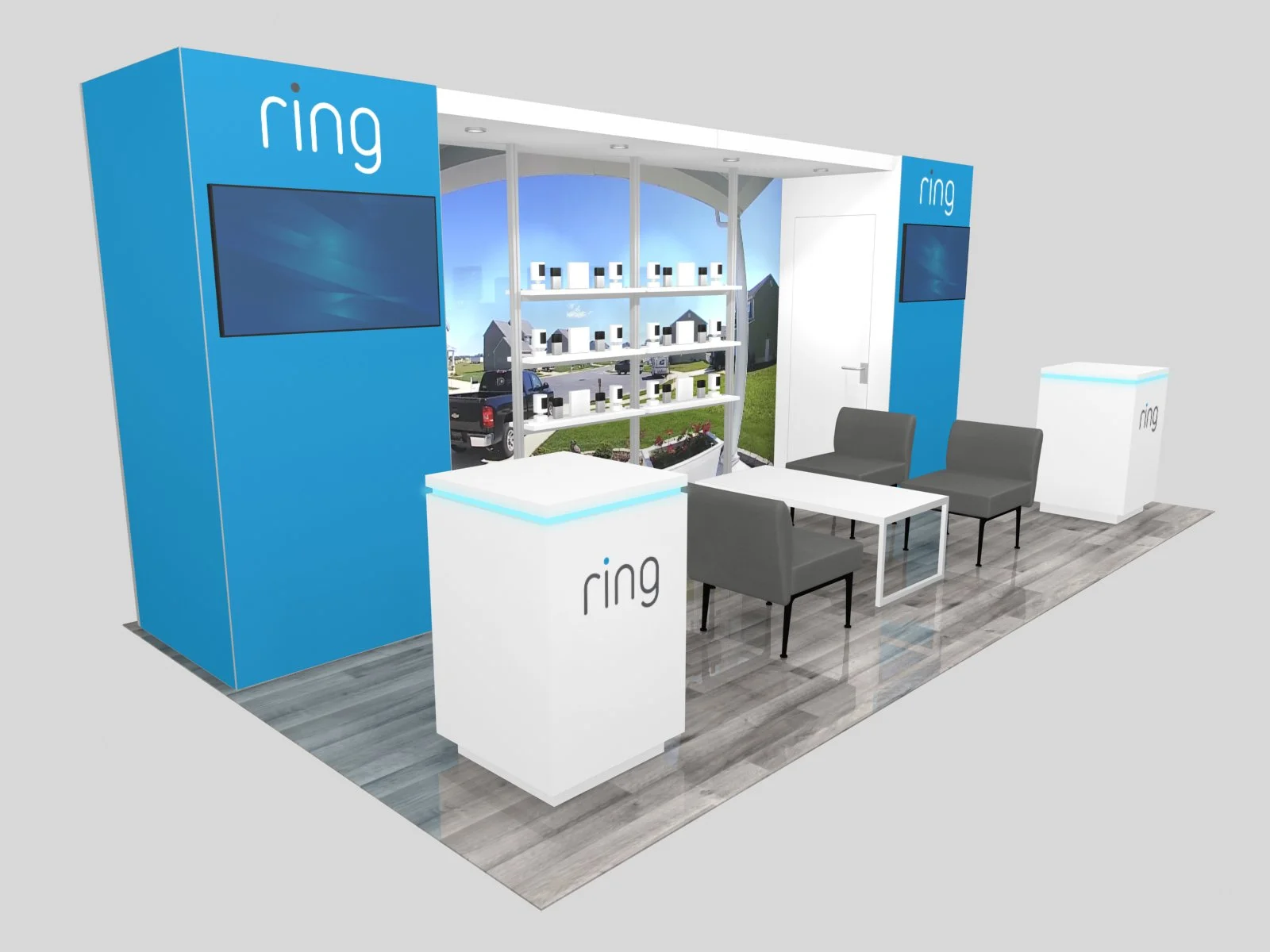
A modular trade show booth is a set of reusable frame, panel, and graphic components engineered to reassemble into different sizes and layouts, rather than a single fixed structure built for one footprint.
The appeal for an exhibitor working several shows a year out of the Los Angeles area is straightforward: one purchase covers a 10-by-20 at a regional show and a larger footprint at a bigger hall, without commissioning a new build each time.
Execution priorities
- The frame system has to reconfigure between an inline row and a larger footprint without custom parts.
- Graphics need to be modular too, not printed for one exact wall size.
- Case count and weight determine shipping cost between shows more than the design does.
- A refresh plan for graphics matters more than a rebuild plan for structure.
A kit that survives more than one show
The test of a modular system is not how it looks at the first show, it is whether the same frame reconfigures cleanly into a different footprint at the second one without a call to the exhibit house for custom parts.
That reconfiguration usually means the frame is built from a limited set of standard-length struts and connectors rather than pieces cut to one specific layout.
Buyers evaluating a modular system for the first time often underweight this reconfiguration test in favor of how the render looks, which is backwards, since the render only has to work once and the frame has to work every quarter.
What changes between a regional show and a downtown hall
A show at a smaller regional center might only call for the 10-by-20 configuration, while a larger downtown hall the next quarter can justify unpacking the full kit into a bigger footprint with added lighting or a hanging element.
Planning both configurations before the first show ships avoids the common mistake of designing only for the bigger footprint and discovering the smaller one looks sparse.
Storage between shows
Between shows, a modular kit sits in cases somewhere, and coastal storage space near Santa Monica runs at a premium compared to warehouse space further inland, which is part of why many exhibitors store the kit with the exhibit house rather than locally.
Case count also drives shipping cost every time the kit moves, so a design that adds a case just to gain a marginal visual upgrade is worth questioning before it becomes a permanent line item.
A kit stored offsite also needs a clear checkout process before every show, so components arrive complete rather than missing a connector or a graphic panel that got separated from the rest of the shipment months earlier.
Refresh without a rebuild
Because the graphics panels are the part most likely to look dated first, a well-planned modular system separates the graphic layer from the structural frame so a refresh means new panels, not a new structure.
That separation is the actual return on a modular purchase: the frame amortizes over years while the graphics update on whatever cycle the message needs.
Budgeting for that refresh cycle up front, rather than treating it as a surprise cost a few years in, is what keeps a modular booth from quietly becoming the oldest-looking structure on the floor.
Frequently asked questions
How many show sizes should one modular kit plan for?
Most exhibitors plan for two configurations, a smaller inline or peninsula footprint and a larger island layout, since designing for every possible size adds cost without adding much practical flexibility.
Where should the kit be stored between shows?
Many exhibitors store with the exhibit house rather than locally, since coastal storage space near Santa Monica costs more than warehouse space further inland and the exhibit house can also handle case maintenance.
Does a modular booth need a new engineering review for every venue?
Not usually, since the frame is pre-engineered to standard configurations, but a hanging element added for a taller hall does need its own rigging check for that specific venue.
How often should graphics be refreshed?
There is no fixed schedule; the point of separating graphics from the frame is that a refresh happens whenever the message changes, without touching the structural investment.
Is a modular kit worth it for a company doing only two shows a year?
It can be, if those two shows are different enough in size that a fixed structure would only fit one of them well; otherwise a simpler rental may cost less over the same two shows.