
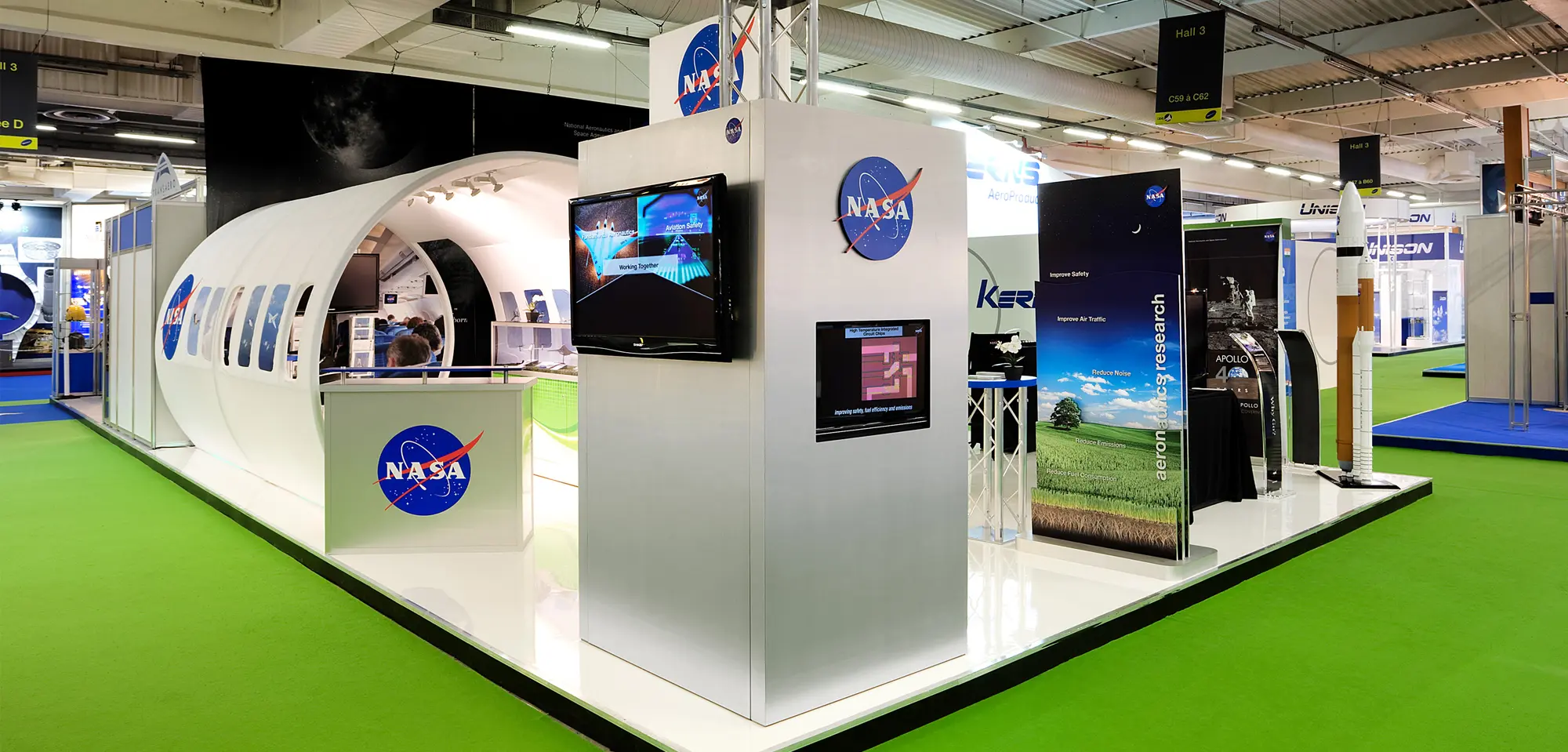
A modular exhibit system is built from reusable components, panels, frames, and connectors designed to reconfigure into different footprints, rather than a fixed structure built once for one specific booth size. That flexibility matters most for an exhibitor whose booth size actually changes between shows on the same circuit.
The tradeoff is real: a modular system generally costs more upfront than a comparable fixed build, and it demands more careful inventory management, since a missing connector or panel can strand an entire reconfiguration. It pays back over a multi-show season, not a single event.
For a Santa Monica exhibitor working the LACC, Pasadena, and Long Beach circuit across a year, where booth footprint often changes show to show based on budget or floor availability, that reconfiguration flexibility is usually the deciding factor over a fixed custom build.
Execution priorities
- Whether booth footprint actually changes between shows on the exhibitor's calendar.
- How many shows the system needs to survive before the upfront cost is recovered.
- An inventory system precise enough that a missing component is caught before move-in, not during it.
- Storage that keeps components organized by configuration, not loose in a single crate.
When reconfiguration actually pays off
A modular system earns its higher upfront cost when booth footprint genuinely varies across a season, a twenty-by-twenty at one show, a ten-by-thirty inline at another, since a fixed custom build for one size either does not fit the next show's space or gets partially rebuilt anyway.
For an exhibitor who books the same footprint every time, a fixed build is usually the more economical choice, and recommending modular in that case would be recommending flexibility nobody is using.
A Santa Monica exhibitor deciding between the two is best served by looking at the actual footprints assigned across last season's shows rather than guessing at how much variation to expect.
The real cost comparison over a season
Comparing modular to fixed on a single-show basis almost always favors fixed, since the modular system's cost advantage only shows up once it has been reconfigured and reused several times without a full rebuild.
We run that comparison against the actual season's show calendar, not a single event, since the answer to whether modular is worth it depends entirely on how many times the system gets reused.
We present that comparison as numbers, not a sales pitch for one option over the other, since a client is better served choosing with the real breakeven point in front of them.
Inventory discipline is the hidden cost
A modular system's flexibility depends entirely on having every panel, frame, and connector accounted for before move-in, since a missing piece cannot always be improvised around the way it sometimes can with a fixed build. That makes inventory management a real, ongoing cost, not a one-time setup task.
We track components by configuration rather than as one undifferentiated pile of parts, so a reconfiguration for a specific show can be checked against a known list before the crate ships.
Storing components without losing the system
Storage for a modular system works differently than storage for a fixed exhibit, since components need to stay organized by which configuration they support, not only packed efficiently into available crate space. Disorganized modular storage is how a system that should save money instead generates repeated replacement costs.
That organization gets built into the storage plan from the first show the system is used, rather than retrofitted after components have already started going missing.
Modular exhibit questions
Is modular always cheaper than a fixed custom build?
No. It costs more upfront and only pays off once reused across several shows with genuinely different footprints. A fixed build is often cheaper for a consistent booth size.
What is the biggest risk with a modular system?
Losing track of components. A missing panel or connector can strand a reconfiguration, so inventory discipline is an ongoing requirement, not a one-time setup.
How many shows does it take to make modular worth it?
It depends on the cost difference and how much footprint actually varies between shows, but the comparison only makes sense evaluated against a full season, not one event.
Does storage work differently for modular systems?
Yes. Components need to stay organized by configuration rather than packed as loose parts, since disorganized storage undermines the whole reason to go modular.
Can a modular system be expanded later if we need a bigger booth?
Often yes, if it was specified with expansion in mind from the start, though retrofitting expansion into a system built for a fixed maximum footprint is usually more expensive than planning for it up front.