
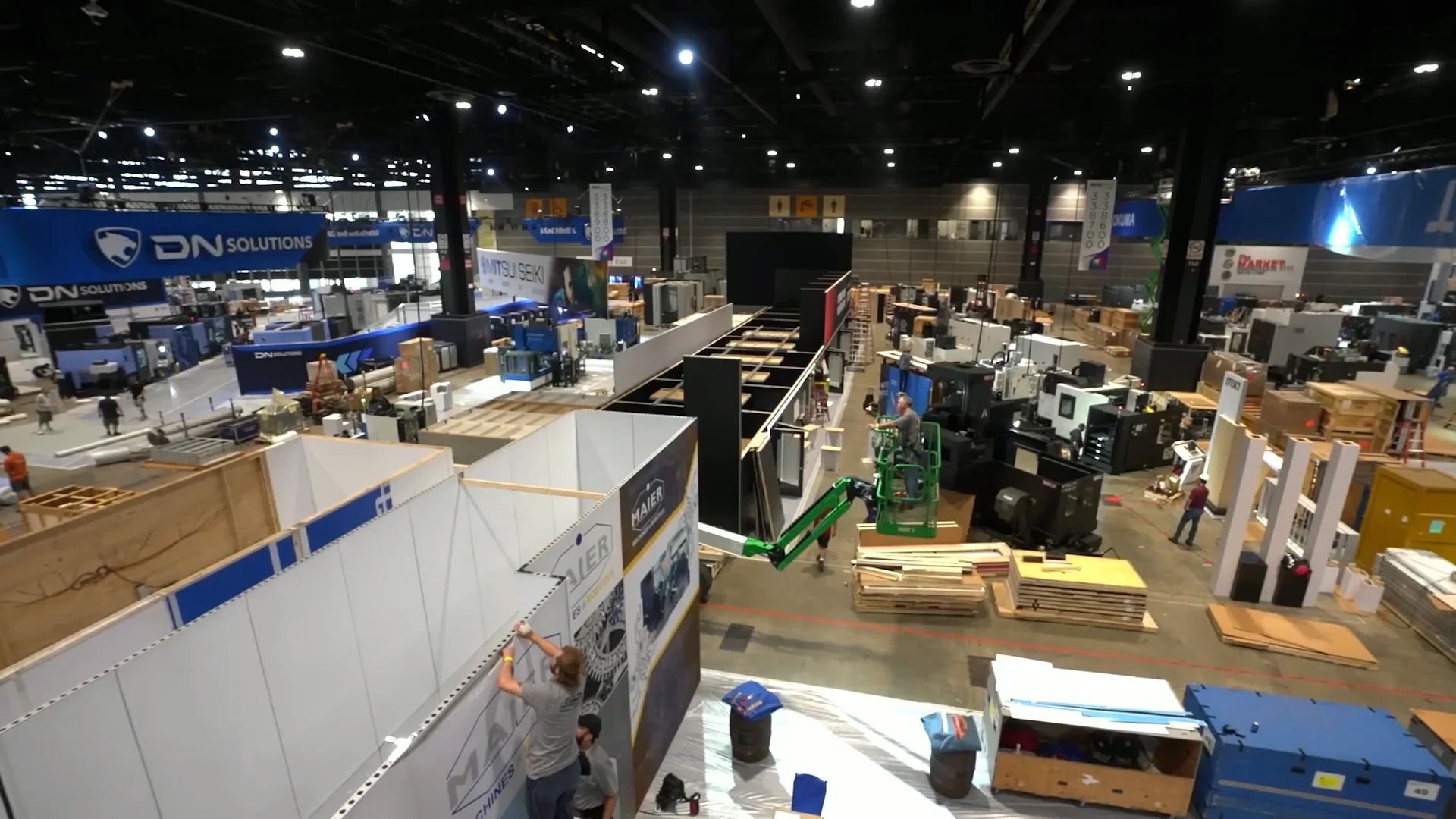
Graphics production starts with color-managed files and ends with an install crew checking the panel against the approved proof under the actual light it will hang in. Between those two points sits substrate choice, print production, and a quality check that catches a seam or a color shift before the booth opens, not after.
A Santa Monica program adds a variable most inland shows don't deal with: coastal humidity and salt air, which affect adhesive graphics differently outdoors near the Pier or Third Street Promenade than they do inside a climate-controlled hall.
Execution priorities
- Color proofed against the actual install light where practical, since mixed hangar light and outdoor sun both shift how a color reads.
- Substrate matched to indoor hall use versus coastal outdoor exposure, since one rated for a hall isn't rated for salt air.
- SEG and rigid substrates proofed separately, since the same file doesn't transfer color cleanly between the two.
- Install QC run as a scheduled step with time built in to fix a flagged panel before doors open.
Color proofing under variable light
A proof approved in a print shop's controlled lighting doesn't automatically match how it reads inside a hangar with mixed daylight and stage lighting, or outdoors where marine layer softens color in the morning and full sun sharpens it by afternoon. We proof against the actual install condition where that's practical, since a color mismatch caught in the shop is a reprint; caught on-site during install, it's a delay.
SEG and rigid substrates each take color differently, and a file color-corrected for one doesn't transfer cleanly to the other without its own proofing pass.
Choosing substrate for where the graphic actually hangs
Indoor hall graphics at the Los Angeles Convention Center or Long Beach Convention Center can run lighter fabric or rigid panel without weather exposure to plan around. A graphic hanging outdoors, on the Third Street Promenade or near the Pier for an activation, needs a substrate rated for wind and humidity, and the mounting hardware needs the same rating or the panel outlasts its own fasteners.
Install QC as the last checkpoint before doors open
The final check happens on the wall, not on the print floor: seams aligned, color matched to the approved proof, edges clean, and no lamination lifting from handling during transit. We run that check as a scheduled step in the install sequence, with time built in to fix a flagged panel before the crew moves to the next task, rather than discovering the issue during a final walkthrough with no time left.
Working with an in-house design team versus building from a brand book
Some clients hand over finished, print-ready files; others hand over a brand book and need the graphics built from it. Either way, the production process checks the file or the design against the actual substrate and install condition before it goes to press, since a brand book's color values don't automatically translate to a printed and laminated panel.
For clients without an in-house design team, we build the panel layout around the venue's real sightlines, an aisle approach at a convention hall, a storefront-width footprint on the Promenade, rather than a generic exhibit template. That approach holds whether the client is a first-time exhibitor or a national brand running the same graphics package across a dozen shows a year.
Graphics production questions
Why would the same file print differently on two substrates?
SEG fabric and rigid panel absorb ink and reflect light differently, so a file corrected for one substrate needs its own proofing pass before it's approved for the other.
Does outdoor humidity actually affect graphics near the coast?
Yes. Salt air and coastal humidity affect how adhesive graphics and certain laminates hold up outdoors compared to a climate-controlled hall, which factors into substrate choice for Pier or Promenade work.
When should color be proofed against the actual venue light?
Whenever the install condition differs meaningfully from the print shop, mixed hangar lighting or full outdoor sun, since a proof approved under one light can read differently under another.
What happens if a QC check flags a panel during install?
It gets fixed or replaced against the build schedule's built-in buffer, which is why that buffer exists rather than treating QC as a final pass with no time left to correct anything.
Does graphics production work from finished files or from a brand book?
Either. Finished files get checked against substrate and install condition before printing; a brand book gets built into layout and panel design from scratch.