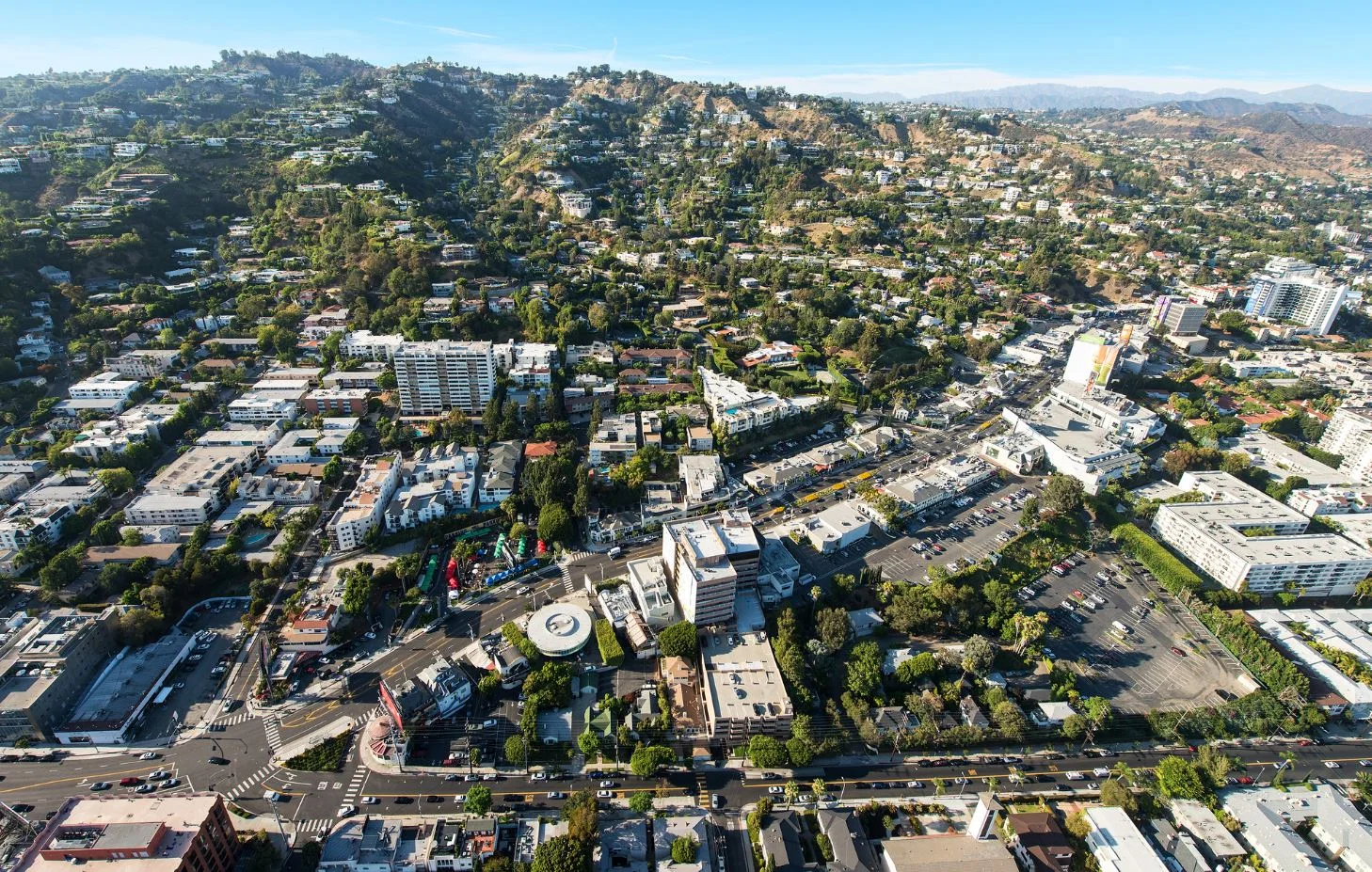
The Pacific Design Center, the blue and green glass complex known locally as the Blue Whale and the Green Whale, houses interior-design and furniture showrooms and runs its own trade events for the design industry, giving West Hollywood a genuine trade-show identity most nearby neighborhoods lack.
The Sunset Strip corridor, home to the famed Whisky nightclub, the Roxy, and a run of boutique hotels including the Andaz West Hollywood, built as the Continental Hyatt House and once a well-known rock-and-roll hotel, supports music-industry and media events alongside its nightlife.
Melrose Avenue's retail stretch runs along the city's northern edge and adds another layer of brand-activation opportunity distinct from the Strip's music-venue scene.
Execution priorities
- The Pacific Design Center hosts organized trade events for the interior-design and furnishings industry, its closest match to a true exhibit venue.
- Sunset Strip hotels, including the Andaz West Hollywood and the London West Hollywood, carry meeting and event space tied to the entertainment industry.
- Melrose Avenue's boutiques support smaller retail-adjacent brand activations distinct from the Strip's nightlife scene.
The Pacific Design Center's built-in trade identity
Unlike most Westside neighborhoods, West Hollywood already runs a trade-show model natively: the Pacific Design Center's WestWeek and related design events bring architects, interior designers, and furniture buyers into its showroom floors on a regular schedule, and the complex's scale, three connected buildings with a combined multi-hundred-thousand-square-foot footprint, is closer to true exhibit space than anything else on the Westside outside Barker Hangar.
Booking into the PDC means working within its existing showroom-tenant structure rather than a blank convention hall, so a program's fit depends on whether it aligns with the design and furnishings trade the complex was built to serve.
The Sunset Strip and entertainment-industry hospitality
The Strip's mile-and-a-half stretch of Sunset Boulevard carries some of the city's most recognizable music venues alongside hotels built for the entertainment industry's traveling talent, and that history still shapes the hospitality product: private rooftop events, listening parties, and press activations are a natural fit here in a way a formal exhibit booth is not.
Street parking on Sunset itself is limited and heavily trafficked at night; valet through a partner hotel is the standard plan for any evening event drawing more than a small group.
Melrose Avenue as a separate retail corridor
Melrose Avenue, running along West Hollywood's edge with Los Angeles, carries its own retail identity distinct from the Strip, more streetwear and design-forward boutiques than music venues, and works better for daytime pop-up activations tied to a retail or fashion angle than for evening entertainment programming.
Because Melrose crosses the boundary between West Hollywood and the city of Los Angeles, permitting can involve either jurisdiction depending on the exact block, which is worth confirming before locking a location.
A small city with its own municipal identity
West Hollywood incorporated as its own city only in 1984, and it remains one of the smallest cities in Los Angeles County by land area, which means event permitting, street closures, and noise ordinances run through the city's own government rather than through the city of Los Angeles, even though the two are smoothly adjacent on the ground.
That small footprint also means the city's several distinct commercial strips, the Design Center around Melrose Place, the Strip itself, and Santa Monica Boulevard's business corridor, sit close enough together that a multi-venue program can move between them in minutes rather than needing a full transfer plan.
Building a West Hollywood program
Design-industry programs fit naturally at the Pacific Design Center; entertainment and media programs lean toward Strip hotels and venues; retail-forward activations look to Melrose. Matching the program to the right corridor, rather than treating West Hollywood as one interchangeable neighborhood, is the difference between a natural fit and a forced one.
Frequently asked questions
Can we run a trade show at the Pacific Design Center?
Yes, if it fits the design and furnishings trade the complex serves. The PDC runs its own scheduled trade events and showroom-based programming, so availability and fit are coordinated directly with the venue.
What kind of events suit the Sunset Strip best?
Music-industry showcases, listening parties, press events, and hotel-based receptions fit the Strip's entertainment-hospitality character better than a formal exhibit-booth program.
Is Melrose Avenue in West Hollywood or Los Angeles?
Melrose Avenue runs along the boundary between the two cities, so permitting depends on the exact block and may involve either West Hollywood or Los Angeles jurisdiction.
How does parking work on the Sunset Strip at night?
Street parking is limited and traffic is heavy after dark, so valet arranged through a partner hotel or venue is the standard approach for evening events.