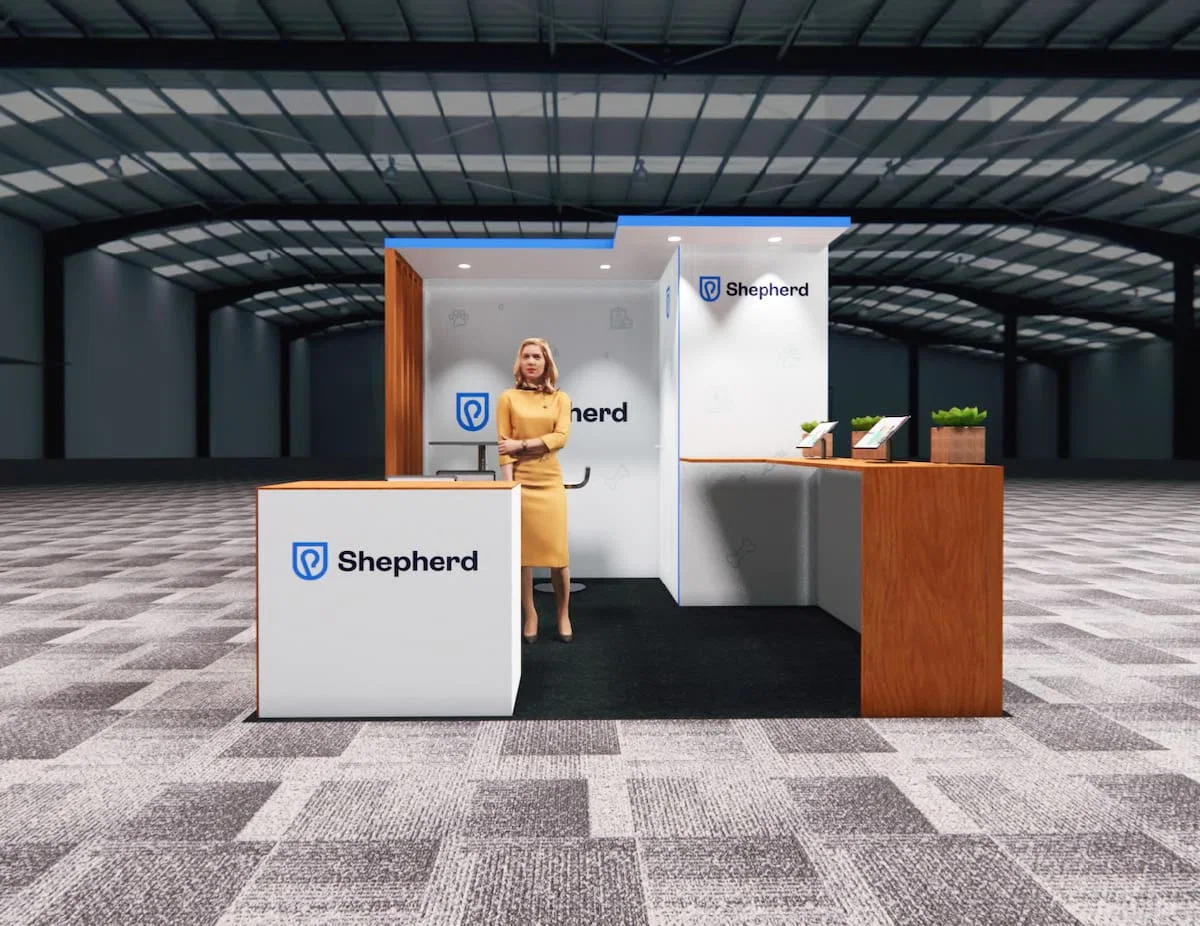
A rental exhibit booth is a structure owned by the exhibit house, not the exhibitor, assembled fresh for one show and returned afterward instead of shipped back to a warehouse to wait for the next one.
The appeal is straightforward for a company that does not want to own, store, or maintain a booth between shows, particularly one whose show calendar changes footprint or venue from year to year.
Execution priorities
- No storage cost between shows, since the structure returns to the exhibit house.
- Graphics are usually still the exhibitor's own, printed fresh for each show.
- Design flexibility is limited to what the rental inventory can configure.
- Turnaround from booking to show week needs more lead time than owning already-built graphics.
Renting instead of owning a depreciating box
A structure that only comes out of storage a couple of times a year still depreciates, still needs maintenance, and still costs money to store even when it is not in use, which is the math that makes renting attractive for a lighter show calendar.
Rental inventory is also updated by the exhibit house on its own cycle, so a rented booth's materials and finishes tend to look current in a way an aging owned structure eventually stops looking.
A company testing a new show or a new market for the first time also benefits from renting simply because it avoids committing capital to a structure before knowing whether that show is worth returning to next year at all.
What's included and what isn't
Rental typically covers the structure, standard furniture, and basic lighting, while graphics, custom finishes, and specialty AV are usually quoted separately and remain the exhibitor's asset even when the structure itself is not.
It is worth confirming exactly what counts as standard inventory before assuming a quote covers everything visible in a rendering, since rental house packages vary in what is bundled.
Damage policy is another detail worth reading closely, since a rented structure returned with normal wear is treated differently than one with a cracked panel or a broken connector, and the fee schedule for the latter is rarely obvious from the initial quote.
Turnaround between reserving and show week
Because the structure has to be pulled from inventory, configured, and shipped, a rental booking generally needs more lead time than exhibitors expect if they are used to owning a structure that sits ready in a warehouse.
Popular configurations at busy show seasons can also book out ahead of smaller or newer shows, so reserving early matters more with rental inventory than with an owned structure.
When renting stops making sense
A company anchoring the same hall footprint at the same show every year eventually pays more in cumulative rental fees than an owned structure would have cost, at which point custom or modular ownership becomes the better long-run math.
The crossover point depends on show frequency and footprint size more than on any fixed rule, so it is worth running the actual numbers rather than assuming either path is automatically cheaper.
Some exhibitors land on a middle path, owning a modular kit for their two or three anchor shows and renting for anything opportunistic that comes up outside that regular calendar, which keeps capital tied up in only the structures that reliably earn their keep year over year across the show circuit.
Frequently asked questions
What does a rental package typically include?
Structure, standard furniture, and basic lighting are usually bundled, while graphics and specialty AV are quoted separately, so it is worth confirming what a specific rental house counts as standard.
How far ahead should a rental booth be booked?
Earlier than most exhibitors expect, since the structure has to be pulled from inventory and configured, and popular setups can book out during a busy show season.
Do graphics have to be rented too?
No, graphics are typically the exhibitor's own asset, printed fresh for the show and reusable at the next one even though the structure underneath changes each time.
At what point does owning cost less than renting?
It depends on how often the same footprint gets used, but a company anchoring the same hall every year on a repeat basis often crosses over to owning within a few show cycles.
Can a rental booth be customized to look less generic?
Yes, within the limits of the rental inventory's configurations, and custom graphics and finishes go a long way toward making a rented structure look distinct from the next booth using the same base parts on the floor.
Does a rental booth need a separate insurance policy?
Often yes; many rental agreements require the exhibitor to carry coverage for the duration of the show, separate from whatever general liability policy the company already holds, so it is worth confirming the requirement before the show, not at pickup.